
What are the differences between LED chips ?
Which type should I choose?
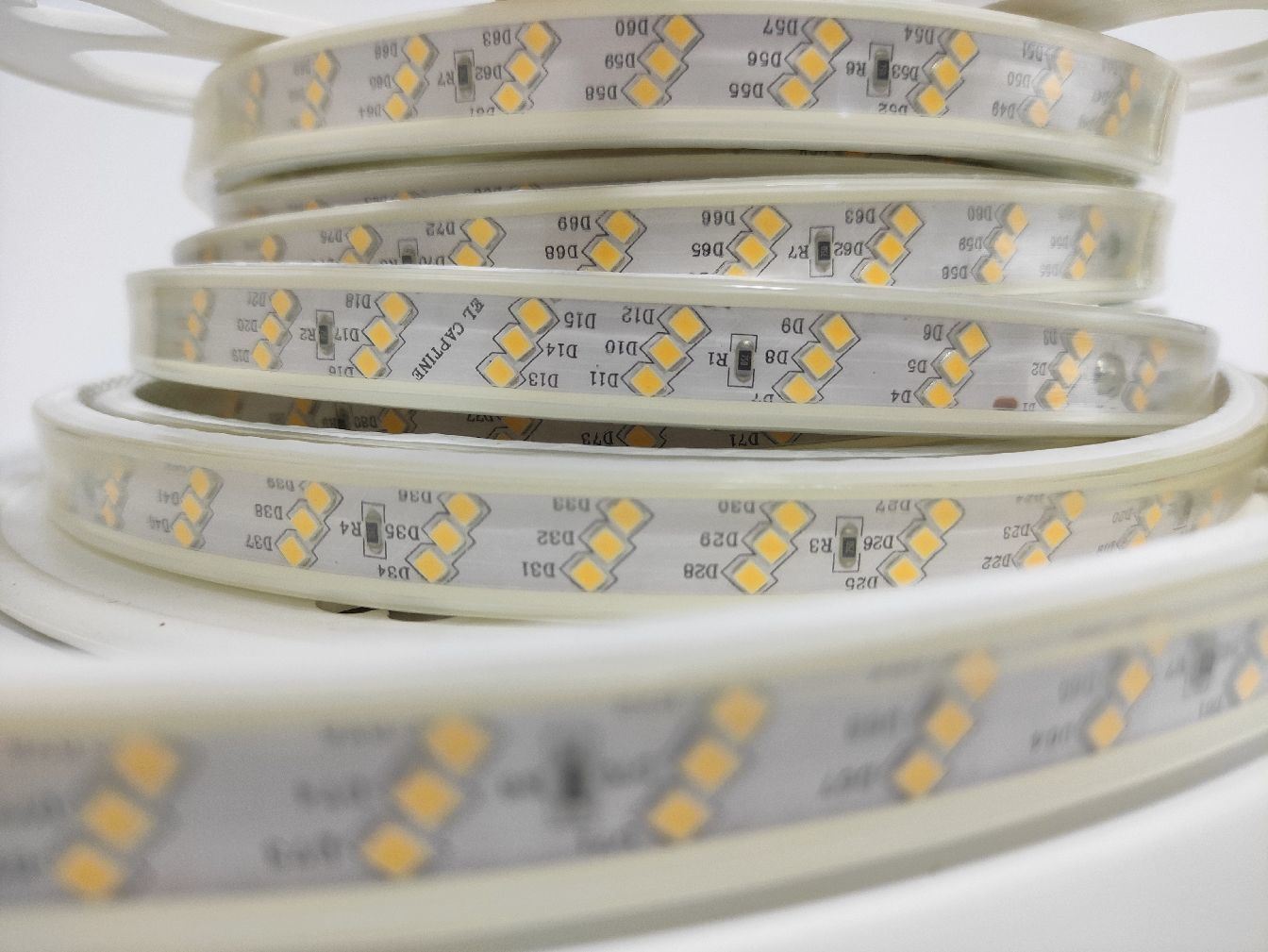
LED strip lighting can be manufactured using a variety of different LED chip types.
Below, we’re going to explain the main differences between them –
by comparing the most commonly used chip types on the LED tape
What does the number of an LED chip mean?
LED chips (also known as surface mounted diodes or SMDs) are all identified by a four-digit number.
This code is less complicated than it looks – it simply indicates the size of the LED chip.
For example,
the dimensions of SMDs on LED strip lights are 5.0mm x 5.0mm.
Which is the best LED chip?
LEDs like s, s, s and s aren’t really different types of chip at all – they’re simply different sizes.
Each has its own spec: different power requirements and output brightness.
The best choice depends on what’s right for your project.
You can find out more about each LED chip below.
The LED chip explained
Measuring 3.5mm x 2.8mm, the SMD is a smaller chip than the LED strip SMD.
You will most often find chips on 12-volt LED strips, drawing 4.8 watts
(also known as 4.8w p/m or 5w p/m LED tape) with 60 SMDs per metre.
These strip lights output around 330-360 lumens per metre,
depending on colour (equivalent to a 40w halogen) – enough to produce a smooth,
bright effect when shining onto any surface.
InStyle offer red, green, blue, amber, and both warm and cool white SMDs as standard colours.
(We can also supply other white colour temperatures, made to order.)
60 SMD p/m LED strip lights are typically used for feature lighting –
such as plinth or coving lights, in homes, bars, restaurants, hotels and other locations.
Though less common than standard 60 SMDs p/m LED tape, SMDs are also used on LED strip lights with 120 chips per metre.
Pulling 9.6 watts (known as 9.6w p/m or 10w p/m LED tape),
these tapes are available in the same range of colours. Light output is exactly double that of 60 SMDs p/m tape
– they have twice as many LEDs – so that’s around 660-720 lumens per metre, depending on colour.
120 SMD p/m LED strips are used for the same kind of feature-
lighting applications as its standard alternative. We recommend them for locations with strong ambient light,
where more brightness is needed than the 4.8w p/m can produce.
The cut points for our 60 SMD-per-metre LED strips are 50mm apart.
The 120 SMD p/m strips have cut points at 25mm intervals.
Both types are also available in waterproofed versions (IP67-rated).
Safe to touch
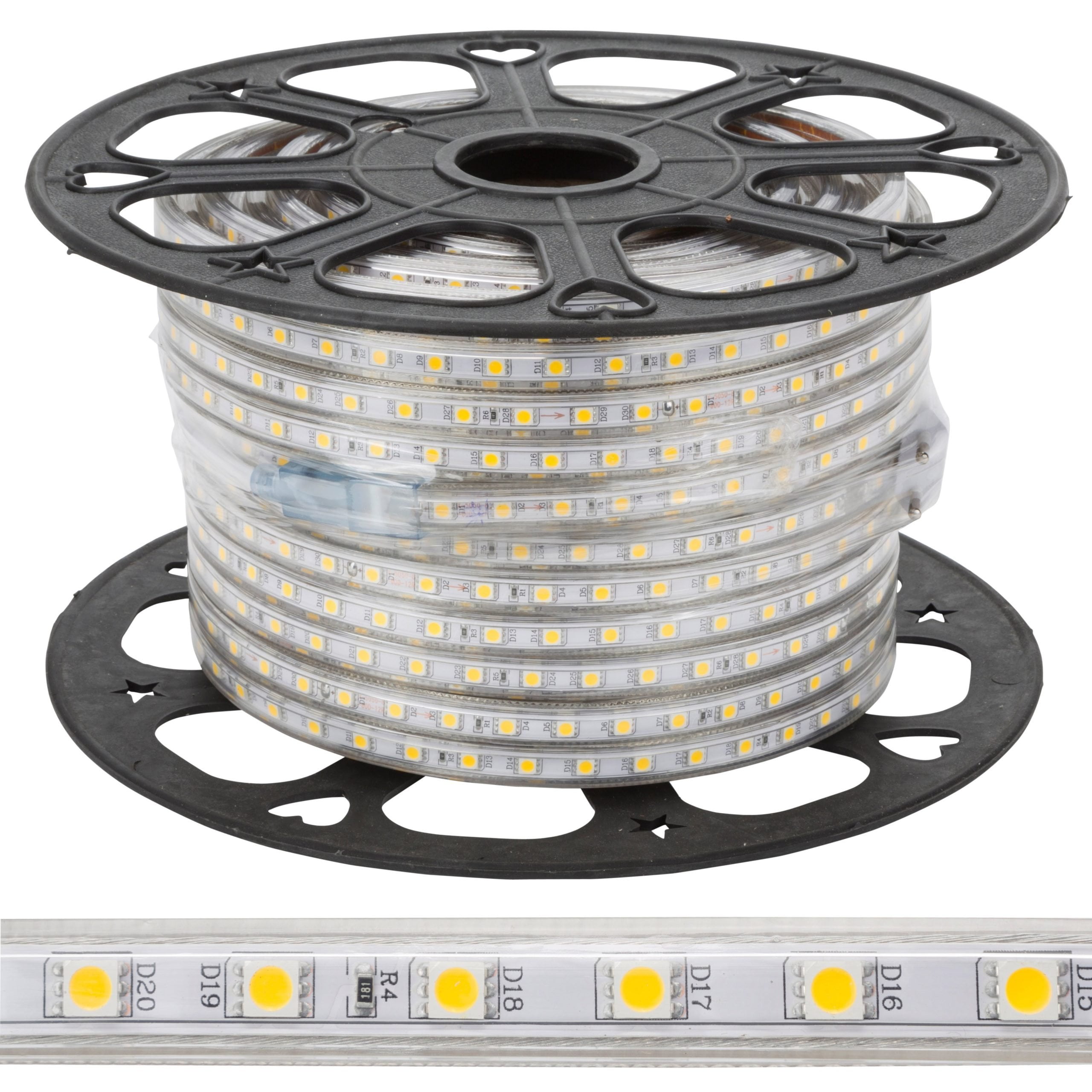 SMDs do not give off a lot of heat – you can safely touch them.
Even so, the 60 LED p/m tape requires PCBs (printed circuit boards) at least 8mm wide, and the 120 LED p/m tape
should use 2-ounce thickness PCBs.
As long as your LED strips meet these minimum specifications,
they can be simply installed anywhere because they have a sufficient heat sink not to require an additional aluminium extrusion.
There are many manufacturers of SMDs.
Epistar-branded SMDs are extremely high quality and give you the brightest SMDs on the market.
They offer excellent colour consistency and reliability, with a life of 50,000 hours at 70% output.
Cheaper alternatives are less bright and less reliable, and are prone to colour inconsistencies within the reel and between reels.
Double-power SMD explained
Double-power SMDs are the same size as standard-power LEDs.
They are available in the same colours, drawing twice the power to give twice the output.
LED strip lights manufactured using double-power SMDs have 120 LEDs per metre and pull 19.2 watts per metre
.(also known as 19.2w p/m, or 20w p/m).
Double-power LED strips use a 2-ounce 10mm wide PCB to disperse heat effectively,
in order not to require an extra heat sink when installed.
These LED strips are only available for 24-volt systems, as this carries current better.
Lumen output is around 1320-1440 lumens per metre (depending on the colour).
Because of its high brightness, we recommend this LED tape as general lighting, or to replace fluorescent tubes and halogens.
 The LED chip explained
Measuring 50mm x 50mm, the SMD is larger than the SMD.
These dimensions mean that each SMD is big enough to house four separate LED chips (sometimes called ‘quad LEDs’).
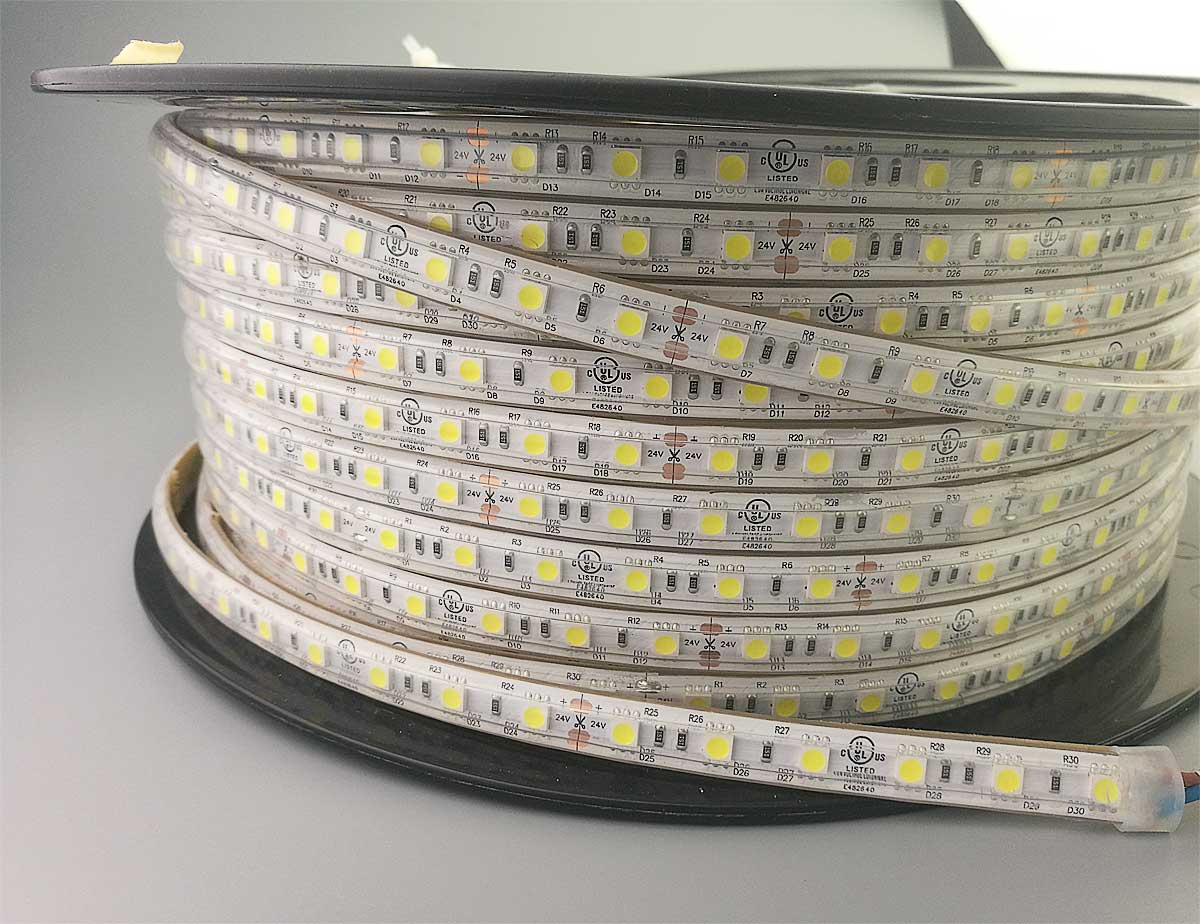
LED chips are often used on 60 LED-per-metre strip lights,
pulling 14.4 watts at 24 volts (commonly called 14.4w p/m or 15w p/m LED tape).
With an output of around 990-1080 lumens per metre, depending on colour,
this tape gives you a smooth, bright effect when shining onto a surface.
Available colours are:
- warm and cool whites (other Kelvins requirements can be manufactured on request)
- red, green, blue, and amber single-colour
- and also colour-changing – either RGB or RGBW (red, green, blue, white), using ‘tri’ / ‘quad’ chips (three or four LED chips in one).
These 60 SMD p/m LED strip lights are typically used for general lighting applications, such as corridor lighting,
replacing fluorescent tube lighting, in homes, bars, restaurants, hotels and other locations.
 SMDs used in RGB LED strip lighting
The SMD is actually a ‘tri’ chip, meaning it has three smaller chips in every SMD.
So each white LED actually has three white chips inside.
s can also be used for colour-changing LED tape, with red, green and blue chips inside each LED.
By linking this type of RGB LED strip light to a controller, you can mix any shade of any colour you choose.
(RGBW tape is similar, but uses ‘quad’ LEDs, with an additional white chip.)
RGB LED strip lights are available in two types:
- 30 LEDs per metre (known as 7.2w p/m or 7.5w p/m LED tape) outputs up to 500 lumens per metre and is ideal for feature lighting such as covings, plinths in homes, hotels, restaurants and bars.
- 60 LEDs per metre (aka 14.4w p/m or 15w p/m LED tape) produces up to 1000 lumens per metre, perfect for full wall-washes such as bar frontage, back bars in restaurants, clubs, or the home.
We can supply both types of LED tape (30 and 60 LED p/m options) in waterproofed versions (IP67-rated).
The cut-points on both are spaced at 100mm intervals.
Branded Epistar SMDs are the highest quality LEDs on the market. They provide the best brightness, colour consistency and reliability with 70% output at 50,000 hours.
Using cheaper alternatives instead, you’ll get dimmer and more unreliable LEDs that output inconsistent colours within each reel and also from reel to reel.
The LED chip explained
A recent development, SMD LED chips are much smaller and much more efficient than many earlier SMD models.
The smaller size of the diodes (just 3.0mm x 1.4mm) means it’s possible to fit more of them on a length of PCB strip
– offering more brightness, without the need for more power.
At InStyle, we use SMDs in the manufacture of our specialized dual-white colour-temp changing (CCT) LED tapes.
Their compact size allows two LEDs producing different white shades to be positioned very close beside each other,
making it possible to mix a varied palette of different white-light tones from a single LED tape.
(A similar set-up to RGB/RGBW colour LEDs.)
The LED chip explained
The SMD is a new choice on the LED market. Instyle LED have now tested chips fully, to confirm their reliability and efficiency.
2.8mm x 3.5mm in size, the chip is so far only available for white LEDs.
In practice, you can view SMDs as a more efficient replacement for the –
producing 20% more light but drawing less wattage. Each SMD pulls 0.2w
(a SMD pulls 0.24w), so that’s around 12 watts per metre compared to 14.4w for the SMD,
based on 60 LEDS p/m. Because the SMD is smaller and doesn’t get as hot,
it’s possible to mount up to 120 LEDS p/m – that’s 24w p/m – giving up to 2600 lumens per metre!
- Cool white SMD 60 LEDS (14.4w p/m) = 1080 lumens per metre
- Cool white SMD 60 LEDS (12w p/m) = 1300 lumens per metre
- Cool white SMD 120 LEDS (24w p/m) = 2600 lumens per metre
InStyle’s LED strip lights are mounted on 2-ounce PCBs (10mm width) for better heat dispersion, superior reliability and longer life.
So this really is a product for the future.
We supply both 12w and 24w p/m LED tapes, in warm white, cool white or any custom white shades.
We also offer splashproof IP65 and waterproof IP67 heatshrink-coated options.
Now that chips have been available long enough to prove themselves,
we confidently predict that more people will switch to them from SMDs, as they realise the advantages.
The LED chip explained
The SMD has been around for several years, but has only recently become an option in the LED tape market.
(Before that, most LED suppliers used these chips on thick PCB rigid strips rather than LED tape, as they require a very good heat-sink.) SMDs have dimensions of 5.6mm x 3.0mm.
A larger LED doesn’t always mean brighter – but in this case, the chip outputs far more light than the more common SMD.
High-quality chips on 60 LED p/m tape can produce up to around 2700 lumens.
(To give an idea of the importance of component quality, lower grade SMDs output less the 2000 lumens per metre.)
LED tapes mounted with SMDs generate more heat than some other LED chips.
Because of this, we recommend installing SMDs with either an aluminium extrusion,
additional heat-sink backing or a thicker and wider PCB. Without these, your LED strip lights may work initially
– but brightness will likely reduce quickly, because overheating is the biggest adverse contributor to the brightness and lifespan
of LEDs. Used 8 hours per day, overheating could see you lose up to 20% in brightness per year!
Instyle LED always uses thicker, wider PC boards and A-grade Epistar-branded SMDs,
so you can always rely on the quality of our LED tape components. We offer this product in all shades of white.
We don’t advise the use of heatshrink to waterproof SMDs, as it can lead to overheating issues.
Summary of LED chip types
In the end, the type of SMD chip doesn’t matter – as long as it can meet your requirements.
InStyle recommend branded Epistar LEDs for the reasons we discussed above (brightness, reliability and colour batching).
When purchasing LED strip lights, you should ask yourselves these questions:
- Do you want feature lighting, task lighting, colour changing, waterproof, etc?
- Dimmable or non-dimmable?
- What colour do you want?
- How bright do you need the LED strips?

lightning
We are pleased to have you visit our pages on social networking sites, where we publish exclusive offers on our website.
Facebook page here.
Twitter account is here.
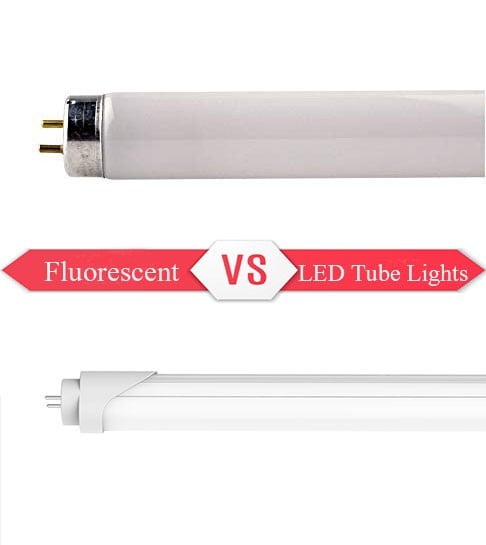 Fluorescent lighting has been around for over 100 years.
 Fluorescent lights are part of the High-Intensity Discharge (HID) family.
 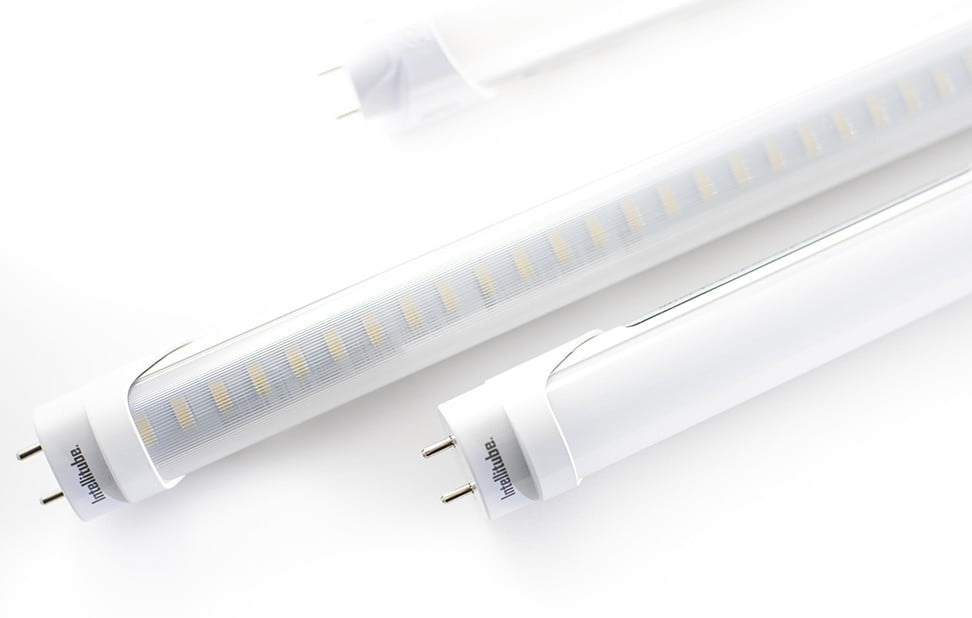 Maintenance Savings
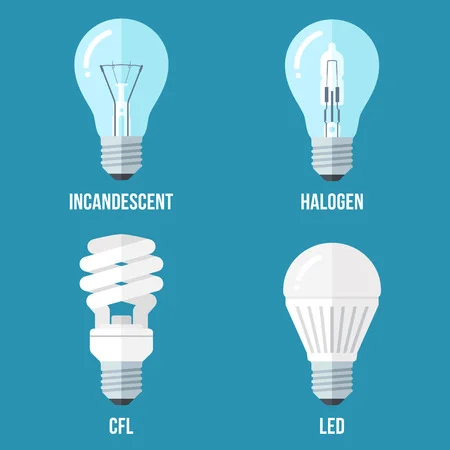 When it comes to the expected quality of LED vs fluorescent tubes, experts again recommend LEDs for all our lighting needs.